Has the design industry lost its imagination?
Petrus Palmér speaks with Anders Byriel about culture, commercial success and the courage to keep making long bets.
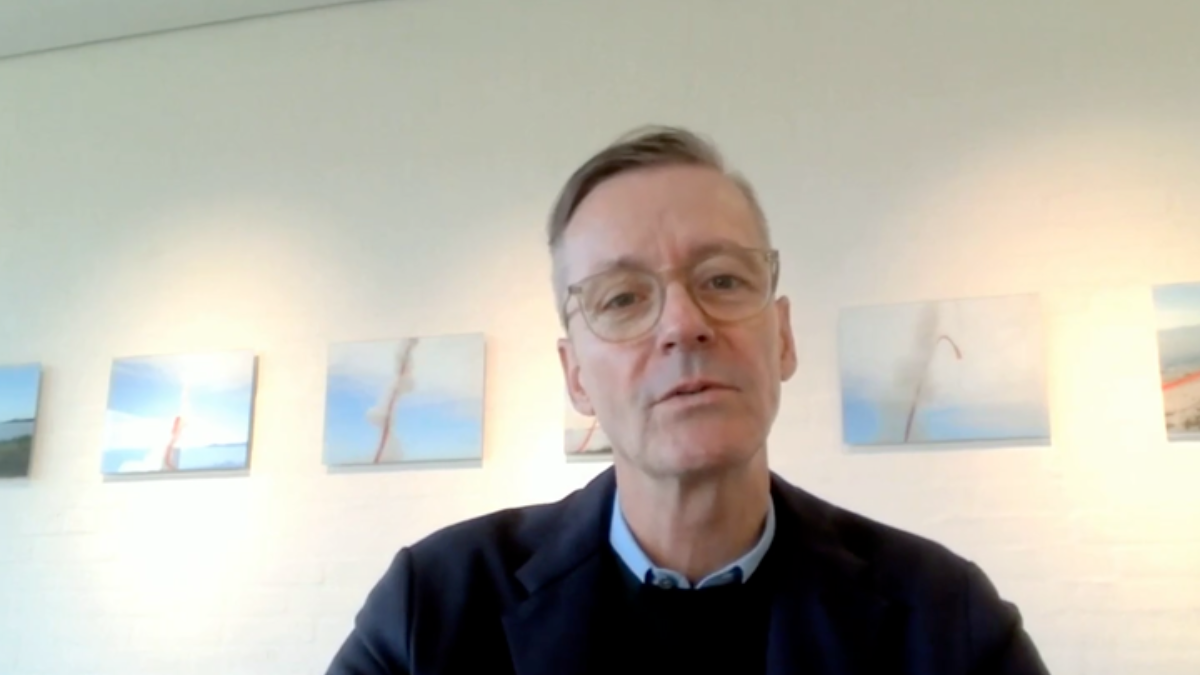
How do you keep making room for the ideas you cannot yet justify?
Anders Byriel joins Petrus Palmér to talk about building Kvadrat, why some of its most important bets took years to pay off, and what happens when the design industry stops trusting its imagination.
The conversation builds on Issue 02, Reinventing the Past, which asks why so much of design looks backwards, and where genuinely new work might come from.
Read Issue 02Read the edited conversation
This conversation has been edited and condensed for clarity.
Culture and commercial success
You joined Kvadrat in 1993 and became CEO in 1999. What did you decide the company needed to become?
We focused the business on architecture. At the time, Kvadrat was more of a design house. Architecture gave us a clearer market and became the foundation for our growth. We went from around seventy people to more than a thousand, and from two incorporated companies to around thirty. But the company has always needed new milestones—not only commercially, but creatively.
From the outside, the culture is the obvious part. Kvadrat has been a beacon throughout my professional life: in the products, the branding and the way you bring art, fashion and architecture into the company. The commercial discipline behind it is less visible. How have you managed to hold both?
They are the two sides of the brain. You have to deliver both. Commercial success creates energy for the cultural side: it funds experimentation and keeps you from being pushed into too narrow a commercial box. But cultural engagement also makes us more competitive. It gives the organisation knowledge, confidence and something meaningful to talk about with architects and designers.
Is that cultural work instinctive, or have you made it part of the company’s structure?
It is programmed. Every subsidiary has a contemporary-culture agenda. Teams visit exhibitions, museums and biennales; they organise educational events and share what they learn. It cannot only live with me or with a small group at the top. The front line has to be invited in. Even when we hire commercial people, if two candidates are equally strong, we will often choose the person with cultural knowledge. We look for hybrids.
That is still a deliberate choice. You could simply manufacture textiles, spend less on culture and make a slightly higher profit. Why do you think fewer design companies are willing to make that choice?
There is more pressure on the people running businesses, and perhaps less room to manoeuvre. But I am most worried when design becomes too programmed. One of our lessons is that you cannot calculate success. If you do not preserve space for experimentation and trying things, you will not move forward. Part of what you do needs to be the icing on the cake. You cannot only produce cakes.
The courage of long bets
Kvadrat has made some unusual bets: Raf Simons, the reinvention of Sahco, and the decision to appoint Bengt Thornefors as its creative director. Those choices now look convincing, but they could easily have gone another way. What happens when a bet does not work?
The advantage of being privately held is that we can be extremely long-term. Something that appears to be a failure may work if you wait long enough. I have a reputation—sometimes a negative one—for not giving up. It is like Sisyphus: we keep rolling the stone back up the hill. Our acoustic business took years of work and investment, but it is now powerful and growing. Sahco is also a journey. The failure is sometimes not the idea, but how long it takes.
You have also invested heavily in circular manufacturing. Has that followed the same pattern?
Yes. We committed to circularity years ago, and it has moved much more slowly than we expected. We have the technology, the products and a strong position in Scandinavia, but outside Scandinavia the market has been slow. It is still not profitable. That is painful, but we keep rolling the stone because we believe its time will come.
Has design lost its imagination?
That requires a rare combination: ownership willing to approve the bet, management capable of carrying it through, and enough patience to let it live. The wider industry seems to have very little room for that at the moment. What is your reading of where we are?
We are in a transformation, and the question is whether it is temporary or permanent. I also see a great deal of design that looks almost like the real thing. In trademark law, a brand can become degenerated when its name is used for everything. Something similar is happening in design. When I entered the textile industry, there was energetic creative competition. I often saw things and thought, I wish we had done that. Today I see very little that gives me that feeling. Part of the industry has given up on imagination.
I hear the same thing from furniture designers. They used to return from a fair with ten or twenty things they wished they had designed. Now they are pleased if they see one.
That is a collective challenge. We have to keep making things that create excitement. Fewer companies want to lead, which puts more pressure on those that do. But I do not complain about being copied. It is a privilege to be a design leader. The answer is to keep leading.
You also describe the market as splitting. What is happening to the middle?
The premium middle is under pressure. If customers can buy something that looks similar for much less, many will do that. At the same time, the high end remains strong. I once resisted the idea that the market would split between luxury and low price; I wanted us to offer exceptional design at fair prices. But we now have to defend the high ground while becoming more competitive in the middle. Otherwise design becomes only the icing on the cake—a beautiful reception area while the rest of the project is sourced elsewhere.
That raises the fear that design is becoming a rich person’s game. It is difficult to practise as a designer, and brands increasingly abandon the middle because it is so competitive.
We cannot run away from that competition. New online companies are growing without working with designers at all. If design-led companies want to remain relevant globally, we have to deliver better performance and better value without giving up the designer. We cannot simply educate the market and wait for it to agree with us. We have to respond.
Beauty, desire and what comes next
I have described three preoccupations in the industry today. The first is reissuing proven designs. The second is sustainability, which can become a substitute for design rather than a condition of it. The third is collectible design, where much of the boldest work has moved into galleries but remains protected from industrial scale. Does that description feel fair?
Those are all real forces. On sustainability, Kvadrat has pushed very hard: science-based targets, recycled materials, new processes and circular products. But we became aware that sustainability could take over the whole conversation. First, we are a design company; then we are sustainable. Sustainability is essential, but it is not enough. You still have to create beauty. Otherwise the result can look like a cup of muesli: worthy, perhaps, but not desirable.
And collectible design?
It is positive that prototypes and experimental work can live in galleries. Some of the work that once happened at Cappellini or Moroso has moved there, and the gallery economy can give designers freedom and help them pay their bills. But our own interest is still in designers with an artistic edge who come out of design rather than art. We need experimental products, but we also need industrial relevance.
That leads to the question behind this whole project. Historically, furniture solved clear problems: producing more efficiently, making a safer chair, or creating a stronger structure. Many of those problems were solved a long time ago. Is design now less relevant?
There are still things to solve. Sustainability gives us a new framework: a smaller footprint, different materials and new processes. Constraint can be productive, like Dogme filmmaking. But design also has to help define the present. We cannot define the future, but we can make proposals for it—proposals for how people might want to work and live. A technology company, a bank or a private customer should be able to see something and say: that is how we want our life to feel.
So design still has to solve problems, but it also has to create desire. That is a difficult vocabulary for many furniture companies. Beauty is often expected to be felt, but not discussed as a serious business aim.
Functionality alone will not take us there. A contemporary customer expects more than a problem being solved. We need creativity, beauty and desire as well. If somebody can afford a ten-thousand-euro sofa, our task is to make it exciting enough that they want it instead of buying a two-thousand-euro sofa that merely looks similar. That desirability is part of the work.
You sound optimistic, even while describing an industry that has become stale.
I am an optimist. The slowdown may be a macro trend that changes in a few years. If it is permanent, then we will adapt and work in that environment. The historic work and the reissues will remain; nobody is going to throw away the legacy. But we still need to create the next. Every time we make something exciting, others will follow. There is no way back, so we have to keep moving.
Perhaps design can learn from contemporary art, which is comfortable with many different movements existing at once. Design does not have to remain one Western, Modernist tradition. It can be industrial, experimental, local and global at the same time.
Exactly. The traditional Bauhaus way is not enough. We should look at the thinking in fine art and bring some of that freedom into how we work. Our task is still to make new proposals—and to have the confidence to create what comes next.
That feels like the right place to end. The industry may be under pressure, but its future still depends on imagination.
Anders Byriel
Anders Byriel is CEO of Kvadrat. He joined the family business in 1993 and became CEO in 1999. In this conversation, he reflects on its growth and the place of art, architecture and experimentation within a design company.
Reinventing the Past
On reissues, sustainability and collectible design, and where genuinely new work might come from.
Read the issue